
SQINGEVITY ™

The Longevity Continuum Platform

SQINGEVITY™ is our integrated platform for skin and hair longevity testing, designed to connect biological mechanisms with meaningful product claims.

Working closely with your teams, we begin with your scientific or marketing objectives and build a tailored testing strategy to demonstrate how your active ingredients or finished formulations influence the hallmarks of aging.

Combining in vitro, ex vivo, bioanalytical, and clinical approaches, SQINGEVITY™ delivers a continuous evidence chain from mechanism of action to measurable consumer outcomes, enabling confident, science-backed claims through a single partner.

You keep the intellectual property of every datdaset

  • Proprietary datasets remain your property
  • Exclusive competitive advantage
  • Defensible claims backed by your own evidence

From Fighting Aging to Supporting Longevity

Anti-aging tests describe what skin looks like. Longevity claims show how skin ages and how your product acts on that process. Brands and ingredient manufacturers now look for a partner that supports the whole evidence chain, from mechanism of action to clinical demonstration on volunteers.

Traditional anti-aging tests

Focus on visible signs

  • Wrinkles
  • Firmness
  • Hydration

The longevity approach

Focus on how skin ages

  • Biological drivers
  • Mechanisms of aging
  • Prevention and resilience
  • Long-term skin health

The SQINGEVITY™ continuum

One partner, 5 stages. Each stage adds a level of evidence to your claim. We build the continuum with you around the claim you want to make, tailored to your specific needs.

Claims your brand can defend

Each family lists the claims our evidence can support and the stage that produces it. Mechanistic evidence (in vitro, ex vivo) supports mechanism claims. Only clinical evidence supports visible-result claims. Your brand and your regulatory team set the final consumer wording.

CLAIM FAMILY WHAT THE EVIDENCE CAN SUPPORT
Cellular energy Recharges cellular energy, boosts ATP production, mitochondrial fitness
Protection Antioxidant and UV protection with quantified redox data, protects the proteome from environmental stress
Skin longevity and proteostasis Activates skin longevity, strengthened proteome, cellular cleaning, telomere stabilization, senescent cell reduction, reduced glycation end products, age-related gene expression modulation.
Resilience Inflammation reduction, skin barrier function, microbiome balance


Structure and renewal, mechanism Epidermal renewal, dermal restoration, collagen synthesis, hyaluronic acid stimulation
Structure and renewal, visible Firmness and elasticity, sagging reduction
Vitality and radiance Energized skin, revives dull skin, reduces fatigued-looking skin, radiance boost


Visible, clinically demonstrated results Reduced wrinkle number and depth, moisturization, even skin tone, age spot reduction, perceived age improvement

Why QIMA Life Sciences

Claims that reach the market faster, set your product apart and hold up to scrutiny.

Accelerated time to market

One partner coordinates your whole project across laboratories. Streamlined end-to-end processes shorten the path from research to market-ready claims.

Innovation from precision science

We are a research partner, not a conventional CRO. We deliver precision science at every stage of your project to fuel your innovation. All intellectual property remains yours.

From data to defensible claims

Beyond efficacy data, we turn scientific evidence into claims that resonate with consumers, strengthen brand positioning and stand up to regulatory and market scrutiny.

Evidence building blocks

MOLECULAR

Telomere length

Telomeres shorten with each DNA replication cycle, a process closely linked to cellular aging. Aged fibroblasts show shorter telomeres than young fibroblasts.

Method: qPCR

Model: Aged fibroblasts (Hayflick model)

CELLULAR

Mitochondrial function

Mitochondria supply the ATP that skin cells need. Adding the test compound increases mitochondrial respiratory capacity.

Method: Mitochondrial respiration monitoring (Seahorse® analysis)

Model: Normal human epidermal keratinocytes (NHEK)

Normal"Aged"

TISSULAR

Hyaluronan synthesis

During the aging process, changes in extracellular matrix proteins occur, including a decrease in collagen levels within the dermis.

Method: Immunohistofluorescence

Model: Ex vivo model of “intrinsically aged” human skin (In vitro 3D)

Day 0Day 56

CLINICAL

Wrinkle depth quantification

The treatment led to a significant reduction in wrinkle depth compared to baseline. The accompanying image illustrates both the before and after effects overlaid on an avatar representation.

Method: Image analysis

Model: Human volunteers

Models, tests and biomarkers by stage

Each stage supplies a different kind of proof.

Preclinical testing

1. In vitro models for skin aging

Screen actives and formulations and identify their mechanisms of action on the hallmarks of aging.

  • Primary cells from 300+ donors: keratinocytes, melanocytes and dermal fibroblasts
  • Reconstructed epidermis, dermal equivalent and full-thickness skin
  • Intrinsic aging models: aged primary cells, replicative senescence (the Hayflick model), applied stresses (oxidative stress, medium depletion) and shRNA gene silencing
  • Extrinsic aging models: UV radiation, infrared radiation and particulate matter
  • Senescence models for fibroblasts and melanocytes
  • SKIN-BIOSENSE: reads the antioxidant capacity of ingredients and formulations in minutes
Hallmark Key tests
Genomic instability CPD define with the scientific lead, 8-OHdG (oxidative DNA damage marker), γH2AX (DNA break marker), comet assay (single-cell DNA damage test)
Telomere attrition Telomere length, telomerase activity, telomere capping
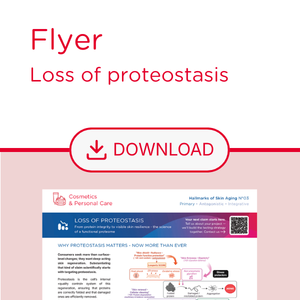
Loss of proteostasis Glycation end products, protein carbonylation, proteasome, chaperones
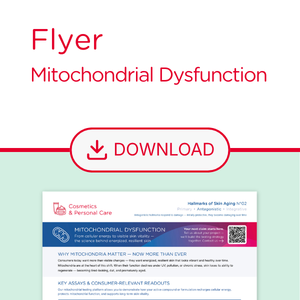
Mitochondrial dysfunction Respiration (Seahorse, a cell respiration analyzer), membrane potential, dehydrogenase activity, NAD+/NADH ratio
Cellular senescence SA-β-gal (senescence enzyme marker), p16 and p21 (cell-cycle arrest proteins), CXCL10
Also covered Inflammaging, cell renewal, nutrient sensing, autophagy, microbiome

Contact us to discuss available assays and models. See all assays for the hallmarks of skin aging or the in vitro models.

2. Ex vivo human skin models and Longevity SCORE

Confirm effects in human tissue, with native architecture and all resident cell populations.

  • Human skin explants, including a speed-aging model that reproduces an aged phenotype in 3 days
  • Stress exposure (UV, oxidative stress) to mimic extrinsic aging
  • Tissue readouts by immunostaining: epidermal renewal, collagen, hyaluronan, dermo-epidermal junction (the boundary between skin layers), sirtuin-1, MMPs (collagen-degrading enzymes), IL-6, p16 and p21, 8-OHdG and mitochondrial markers

LONGEVITY SCORE™

Longevity SCORE™ measures protein carbonylation (oxidative damage to proteins) in ex vivo skin explants. It returns a quantitative score from 0 to 100 for skin resilience, benchmarked against market references. Report available within 4 weeks. The assay uses OxiProteomics patented technology.

Discover Longevity SCORE™

See also: the ex vivo human skin explants page.

Clinical testing

3. Non-invasive sampling and bioanalysis

Measure longevity biomarkers on volunteers without invasive procedures, a direct bridge from lab to clinic.

  • Collection kits for swabbing and tape-stripping, used in clinical studies
  • Epidermal differentiation proteins (filaggrin, caspase-14, K10, claudin), epidermal lipids (ceramides, cholesterol, fatty acids) and natural moisturizing factor components
  • Oxidative stress markers (squalene, MDA as a lipid oxidation marker, catalase, SOD as an antioxidant enzyme) and inflammation markers (IL-8, IL-1β, PGE2)
  • Microbiome assays, plus custom assays and OMICS on request

See also: Bioanalysis of non-invasive clinical samples

4. Clinical imaging and perceived age

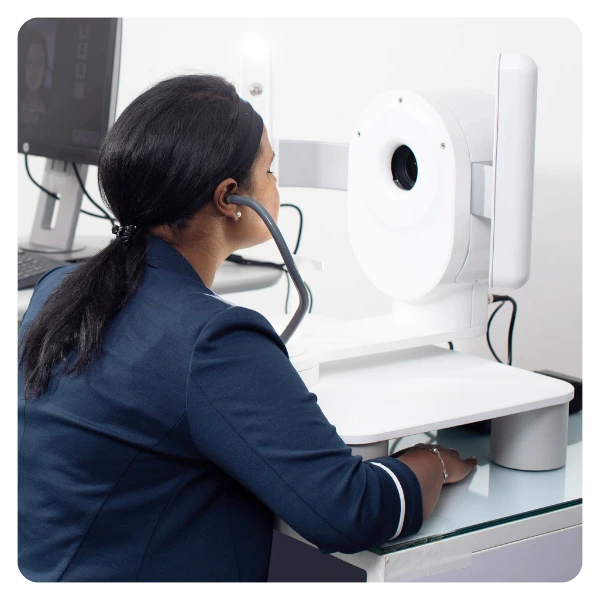
Quantify visible signs of aging and perceived age with objective, reproducible, AI-powered analysis across skin tones.

  • Devices: full-face and portable imaging (ColorFace, SkinCam Pro, DynaCam) and hyperspectral imaging for melanin, hemoglobin and oxygen saturation
  • AI algorithms tailored to each trait and phototype: wrinkles, sagging, pigmentation and texture
  • Perceived age assessment
  • SCAWA scale, an AI-based 12-point wrinkle scale confirm the 12-point wording
  • Avatars and biophysical heat maps that turn data into visuals brands can use

See also: Clinical imaging and the SCAWA scale article

5. Clinical trials across skin phototypes

Deliver clinical proof on real people across skin types, with a dermatologist at each site.

  • Multicentric, multi-ethnic and multi-phototype studies at clinical sites in Brazil, France, India, Romania and Mauritius
  • Efficacy studies: wrinkles, dark circles, complexion homogeneity, radiance, short and long term moisturization, whitening and tanning effect, blue light
  • Consumer perception tests
  • Safety and tolerance studies: patch test, HRIPT (a sensitization test on volunteers) and non-comedogenic testing
  • Procedures, including aesthetic medicine
  • Instruments include Corneometer, Cutometer, VISIA and ANTERA 3D

See also: Clinical trials Webpage

Frequently Asked Questions (FAQ)

Short answers on SQINGEVITY, longevity claims and Longevity SCORE.

SQINGEVITY is the brand umbrella for all QIMA Life Sciences longevity services, from in vitro models to clinical trials. It is not a fixed package. We build the testing path with you around the claim you want to make.

An anti-aging claim targets visible signs of aging. A longevity claim shows that your active acts on the biological mechanisms of aging, the hallmarks, and not only on their visible consequences.

The Longevity SCORE is an ex vivo assay that measures protein carbonylation, a form of oxidative protein damage, in human skin explants. It returns a score from 0 to 100 for skin longevity activation, which you can benchmark against market references. The assay uses OxiProteomics patented technology.

We use an AI-enhanced imaging. The algorithms produce an objective, reproducible perceived age score from facial images, and the same data feeds before and after visuals for your communication.

Explore related Resources

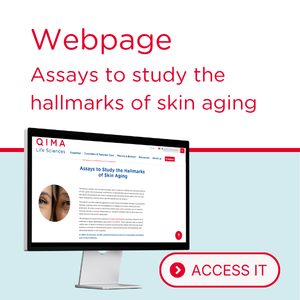
Image of a computer displaying a webpage called "Assays to study the hallmarks of skin aging"
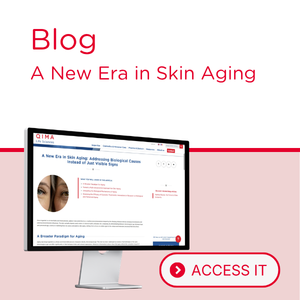
Image of a computer displaying a blog article called "A new era in skin aging"

At QIMA Life Sciences, we specialize in providing comprehensive solutions for studying skin aging and longevity through validated models at both preclinical and clinical levels.

Our dedication to scientific innovation drives us to develop cutting-edge models and approaches, staying aligned with the latest advancements in longevity research.

Slide background
Slide background

Super Flexible Layout Builder

Tons of ElementsReal Drag and DropFullscreen OptionUndo/Redo functionallity

This field is for validation purposes and should be left unchanged.

Hello! How can we help you?

Name(Required)

By contacting QIMA Life Sciences you agree to our privacy policy and terms and conditions.