


Chemotherapy-induced hair loss (alopecia) (CIA) is a common and distressing side effect experienced by many cancer patients receiving chemotherapy. This condition occurs due to the toxic effects of chemotherapy drugs on rapidly dividing hair follicle cells, leading to temporary or, in some cases, permanent hair shedding. Hair loss not only affects patients’ physical appearance but also has significant psychological and emotional impacts, making it a critical area of focus in supportive cancer care.
Understanding the biological mechanisms behind CIA is essential for developing effective treatments to prevent or reduce hair loss during cancer therapy. Preclinical research plays a vital role in this process by providing experimental models that mimic the clinical condition.
QIMA Life Sciences comprehensive portfolio includes both ex vivo and in vivo models specifically designed to support drug discovery and development for CIA. These models enable researchers to study the effects of chemotherapy on hair follicles, screen potential protective agents, and assess hair regrowth strategies in a controlled environment.
By advancing preclinical solutions tailored for chemotherapy-induced hair loss, we aim to accelerate the development of novel interventions that improve patient quality of life while maintaining effective cancer treatment outcomes.
Interested in learning how we can support your drug discovery and development?
Learn more below.
Related Publications
SELECTED PUBLICATIONS ON CHEMOTHERAPY-INDUCED ALOPECIA
CDK4/6 inhibition mitigates stem cell damage in a novel model for taxane-induced alopecia.
>> Check the full list HERE.
Preclinical Models for Chemotherapy-Induced Alopecia Research

EX VIVO MODELS
- Healthy, full-length human hair follicle organ cultures treated with chemotherapeutic agents (e.g., cyclophosphamide, 4‑HC, or taxanes such as paclitaxel and docetaxel)
- Protection and prevention of chemotherapy-induced side effects ex vivo

IN VIVO MODELS
- Humanized mouse model of CIA, inducible with various chemotherapeutic agents (e.g., cyclophosphamide or doxorubicin). Developed in collaboration with Prof. Amos Gilhar, Skin Research Laboratory, Rappaport Faculty of Medicine, Technion—Israel Institute of Technology, Haifa, Israel.
- Assessment of preventive and therapeutic effects of test agents on hair physiology and pathology in vivo using this highly clinically relevant model, including analysis of long-term effects (up to 120 days).
We can help you evaluate the following readouts
Anagen maintenance and catagen induction
Proliferation and apoptosis
Cytotoxicity
Cell-cycle analysis
Epithelial-mesenchymal transition (EMT)
Stem cell number, proliferation, apoptosis, and depletion
Number of hairs per xenograft
Anagen-to-telogen ratio
Multi-omics techniques
…among many others.
Study Examples Using Clinically Relevant Models for Chemotherapy-Induced Alopecia
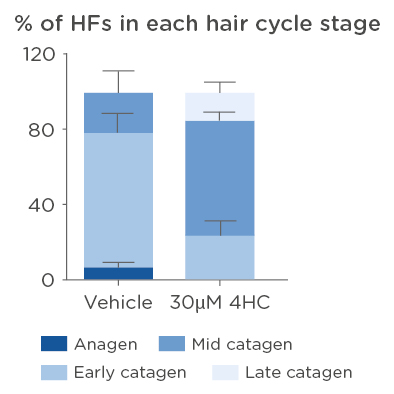
CATAGEN DEVELOPMENT IN HAIR FOLLICLES EX VIVO
Test: Hair cycle staging
Method: Microscopical hair cycle analysis
Model: Healthy hair follicle organ culture
Results: Treatment with 4HC induces premature catagen development in hair follicles ex vivo
EPITHELIAL HAIR FOLLICLE STEM CELL DEPLETION EX VIVO
Test: Epithelial hair follicle stem cell detection
Method: Immunofluorescence staining
Model: Healthy hair follicle organ culture
Results: Treatment with 4HC results in depletion of epithelial hair follicle stem cells ex vivo
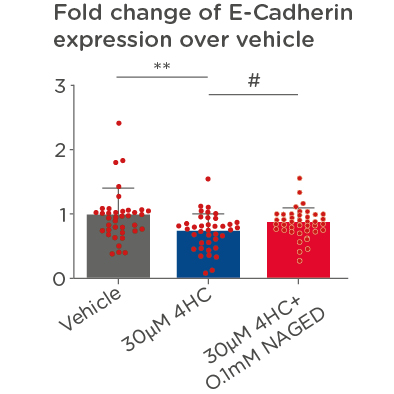
EPITHELIAL-MESENCHYMAL TRANSITION (EMT) EX VIVO
Test: Epithelial-mesenchymal transition analysis
Method: Immunofluorescence staining
Model: Healthy hair follicle organ culture
Results: PPARγ activation by NAGED reduces EMT induced by 4HC
HAIR LOSS INDUCTION BY CYCLOPHOSPHAMIDE IN VIVO
Test: Number of hairs per xenograft
Method: Macroscopic quantification of hair numbers growing on human skin transplants, grafted onto SCID/Beige mice
Model: Humanized mouse model
Results: PPARγ activation by NAGED reduces EMT induced by 4HC


At QIMA Life Sciences, we are committed to staying at the forefront of dermatology research by developing innovative approaches.
We provide smart, validated preclinical models for chemotherapy-induced alopecia and hair loss therapeutics, making us the perfect partner for your research.
Explore the Details in Our Flyer about Chemotherapy-induced Alopecia

Interested in Learning More?
Explore Other Related Topics
HAIR BIOLOGY – MODELS FOR RESEARCH & TESTING
HAIR FOLLICLE DISORDERS

Download the Brochure
PRECLINICAL ONCOLOGY SOLUTIONS

Download the Brochure