

Longevity SCORE

Understanding the Longevity SCORE:

More than a Standardized Skin Oxidative Stress Assay

Understanding the Longevity SCORE: More than a Standardized Skin Oxidative Stress Assay

October 2, 2026
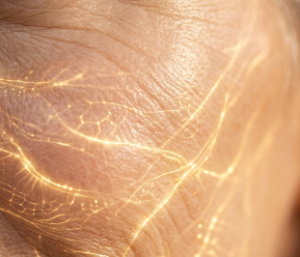
Close-up on a wrinkled face to illustrate the mechanisms of aging, such as oxidative stress

Skin longevity is a complex and developing field. It involves several biological mechanisms that support the preservation of skin structure, function and resilience over time. Unlike classic anti-wrinkle testing, which focuses mainly on visible signs of aging, skin longevity looks at the biological processes that influence how skin ages.

The Longevity SCORE (Standardized Carbonylation Oxidative Resilience Evaluation) helps to quickly evaluate a product’s potential in terms of skin longevity. It reflects the product’s ability to reduce protein carbonylation in UV-stressed human skin tissue: the greater the reduction in oxidized protein damage, the higher the SCORE. It is designed as a first step in this process and can help R&D teams assess a new molecule or formula at an early stage, compare several candidates, identify the most promising ones and select the most relevant next tests for a broader longevity package.

From a SCORE to a development decision.

Key takeaway :

  • The Longevity SCORE provides an early way to assess the potential of a product or active ingredient, compare candidates and decide which ones should move to further skin longevity testing.
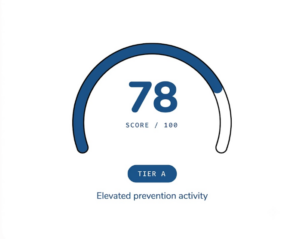
  • The SCORE converts the product’s ability to reduce a validated biomarker, the protein carbonylation in skin tissue, into a standardized value from 0 to 100. The greater the reduction in carbonylation, the higher the SCORE.
  • The response is measured in both the epidermis and dermis of organotypic, ex vivo human skin. The two measurements are combined into a composite score from 0 to 100 and benchmarked against known reference actives.

Know where your product stands on skin longevity.
A standardized, benchmarked assay using organotypic ex vivo human skin

The assay is performed on organotypic, ex vivo human skin. Unlike a test based on a single cell type, this model preserves the main skin compartments and their spatial organization.

Therefore, the process can be adapted to topical products and systemic compounds, depending on the study design and exposure protocol.  The analysis targets both the epidermis, which contributes to barrier function and water balance, and the dermis, which provides structural support through its extracellular matrix. This makes it possible to assess oxidative damage in a tissue context, across both compartments and different cell types.

Skin explants used for the Longevity SCORE are obtained from a broad range of donor profiles (aged 30-40 years or mature skin +50, with Fitzpatrick phototypes II–III or darker phototypes IV–VI, from ethnically diverse skin thanks to access to multiple tissue sources), following informed consent. 

BEFOREAFTER

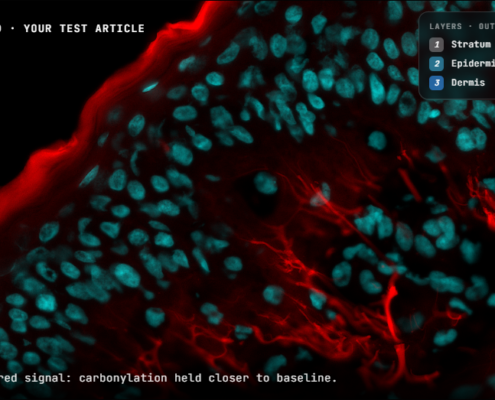
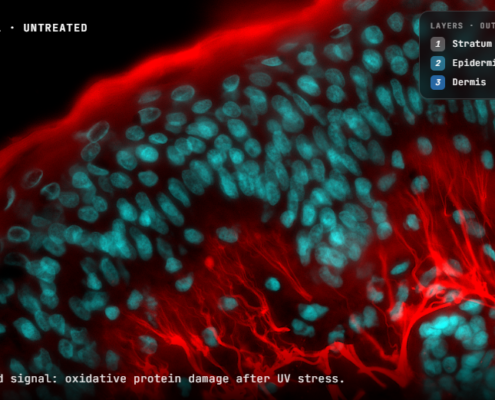
Before-and-after imaging of protein carbonylation in a reconstructed skin model: The epidermis and dermis layers are visualized, with cell nuclei shown in cyan and carbonylated proteins highlighted in red. This approach enables the assessment of this hallmark of aging and its modulation following treatment.

How is the Longevity SCORE obtained?

The test follows a standardized workflow.

  1. Sample preparation and UV stress

First, organotypic human skin explants are exposed to a controlled UV stress. The exact stress conditions are part of the proprietary test protocol. The explants are then treated with the formula or active ingredient and compared with a UV-stressed control and an untreated tissue.

  1. Protein carbonylation assay

Then, oxidized protein damage is quantified through the carbonylation biomarker. The global signal is measured in the epidermal and dermal compartments of the tissue.

  1. Score calculation

The reduction in carbonylation level measured across the epidermis and dermis in the treated and challenged condition is compared with the stressed control.  The resulting percentage of protection is then converted into a standardized score from 0 to 100. A greater reduction in carbonylated proteins corresponds to a higher SCORE. The final result includes the SCORE and the relevant statistical analysis.

  1. Benchmarking and ranking

Finally, the obtained SCORE is positioned against a panel of reference actives, such as vitamins C and E, polyphenols, peptides and osmolytes. The result therefore provides a relative position given it is assigned to a defined tier and positioned relative to the reference actives, rather than an isolated laboratory value.

From sample preparation to actionable insights: a reconstructed skin model is treated and incubated before being analyzed by high-resolution imaging. Carbonylation levels are then quantified across the epidermis and dermis, followed by statistical analysis to assess treatment effects. The results are compiled into a comprehensive report, including data interpretation and benchmarking against relevant reference values.

What can a Longevity SCORE tell you?

A high SCORE indicates that the tested product or active reduces protein carbonylation following the induced oxidative stress. This provides evidence of protection against oxidized protein damage in human skin tissue and may support product positioning around:

  • Photoaging protection;
  • Carbonylation protection;
  • Skin resilience;
  • Protection of skin proteins;
  • Preservation of skin function under environmental stress.

The skin Oxi-Proteome literature has also linked protein oxidation with changes in epidermal hydration and barrier function, as well as with dermal protein damage following environmental stress. A good SCORE can therefore identify a relevant lead for further testing, for example on epidermal hydration and barrier function, dermal proteins and extracellular matrix integrity, mitochondrial function, cellular senescence, inflammation, or other mechanisms linked to skin aging. These effects must be assessed with dedicated tests.

See a Sample Report Now

Gauge Gauge

Why is carbonylation a relevant biomarker ?

The approach is linked to several biological mechanisms described in the Hallmarks of Aging framework, including oxidative stress, mitochondrial dysfunction, cellular senescence, inflammation and loss of proteostasis.

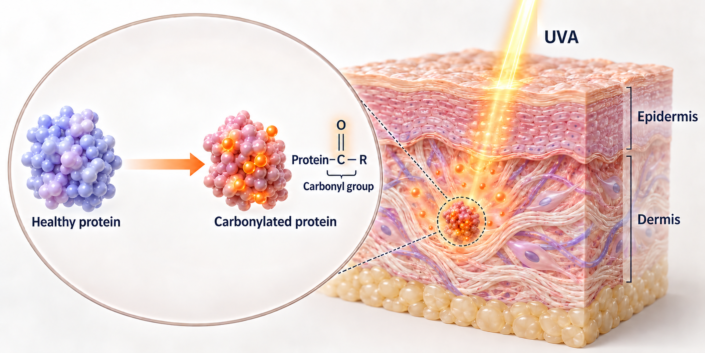
One consequence of oxidative stress is protein carbonylation. This chemical modification is a well-characterized marker of oxidized protein damage and is associated with skin aging. Protein carbonylation reflects the accumulation of oxidative damage caused by environmental stressors such as UV exposure, pollution and blue light.

However, this damage signature can be tracked across both the epidermis and dermis, and in different cell types including keratinocytes, fibroblasts and melanocytes. It also affects both intracellular and extracellular proteins. This is relevant to skin function because the epidermis and dermis have different but closely linked roles.

Research on the skin Oxi-Proteome has shown that protein oxidation can provide a molecular signature of exposome stress (Cavagnino A, et al., 2019).

What has been missing is a simple and comparable way to express this biological response. Many oxidative-damage assays generate laboratory-specific values that are difficult to compare across products or studies.

Skin irradiated to UVA and inducing carbonylation on proteins

UVA-induced protein carbonylation, a hallmark of skin aging, across the epidermis and dermis.

Technical details about carbonylation detection in skin tissue

The assay used to detect protein carbonylation relies on fluorescent probes functionalized with optimized amino-oxy groups. These probes bind to carbonyl groups directly in the tissue. This approach is designed to improve the accuracy and sensitivity of carbonyl detection compared with the commonly used DNPH-based derivatization method.

The in situ fluorescent labeling also provides spatial information. Oxidative damage can be visualized within the tissue and quantified separately in the epidermis and dermis, rather than being measured as one pooled value.

The approach builds on more than 10 years of scientific work in oxidative and spatial proteomics, supported by more than 30 peer-reviewed publications and 200 validated assays.

Start with a SCORE, then go further

The Longevity SCORE is designed as a fast and cost-effective first test and provides a measurable biological lead for the next stage of development. It can help assess the potential of a new molecule or formula or rule out a less promising candidate before investing in more extensive studies.

As a Partner Research Organization, QIMA Life Sciences offers the SCORE as a starting point for a broader longevity testing strategy. Depending on the result and the product objectives, the study can be extended with hydration and barrier assays, dermal matrix testing, mitochondrial function, cellular senescence, inflammation, non-invasive biomarker analysis or clinical studies. By integrating the Longevity SCORE data with clinical studies, brands can ensure that their claims are supported not only at the cellular level but also through measurable consumer benefits.

Combining in vitro and ex vivo results with clinical imaging (e.g., high-resolution skin image capture), non-invasive biomarker analysis, and clinical trials enables the development of a scientifically robust and defensible “from cells to claims” story for longevity skincare. This is exactly where QIMA Life Sciences can help!

This progressive approach helps build a broader and evidence-based skin longevity story.

Start with a SCORE. Build the evidence for your longevity claim.

Interested in clinical visualization?

Discover SCAWA Scale

SCAWA Scale

Written & Edited by:

Aline Chrétien, PhD

Marketing Project Manager

Curious where your Longevity skincare products & actives stand?

See a sample report now

FAQ on Skin Longevity SCORE

You’ll receive your completed report within four weeks of sample receipt.

We recommend a minimum of 5g / 5ml of product to account for all of the experimental conditions and replicates needed for a reliable SCORE assessment.

You can order multiple SCORE report. Each SCORE tests one active or formulation independently against reference standards. Because it is standardized you will be able to compare multiple actives.

Our panel covers vitamins C & E, polyphenols, peptides, osmolytes, and more. Contact us for the full list.

SCORE technology is backed by peer-reviewed publications and alignes with OECD guidance on biomarker-based tests, MoCRA and FDA claims substantiation.

Downloadable high resolution fluorescence images are included with the report. Ex vivo samples are kept for a period of 6 months for follow-on characterization.

References

At QIMA Life Sciences, we specialize in providing comprehensive solutions for studying skin aging and longevity through validated models at both preclinical and clinical levels.

Our dedication to scientific innovation drives us to develop cutting-edge models and approaches, staying aligned with the latest advancements in longevity research.

Image of a computer displaying a webpage called "Assays to study the hallmarks of skin aging"
Image of a computer displaying a webpage called "Skin Longevity & Aging"
Image of a computer displaying a blog article called "A new era in skin aging"

This field is for validation purposes and should be left unchanged.

Hello! How can we help you?

Name(Required)

By contacting QIMA Life Sciences you agree to our privacy policy and terms and conditions.