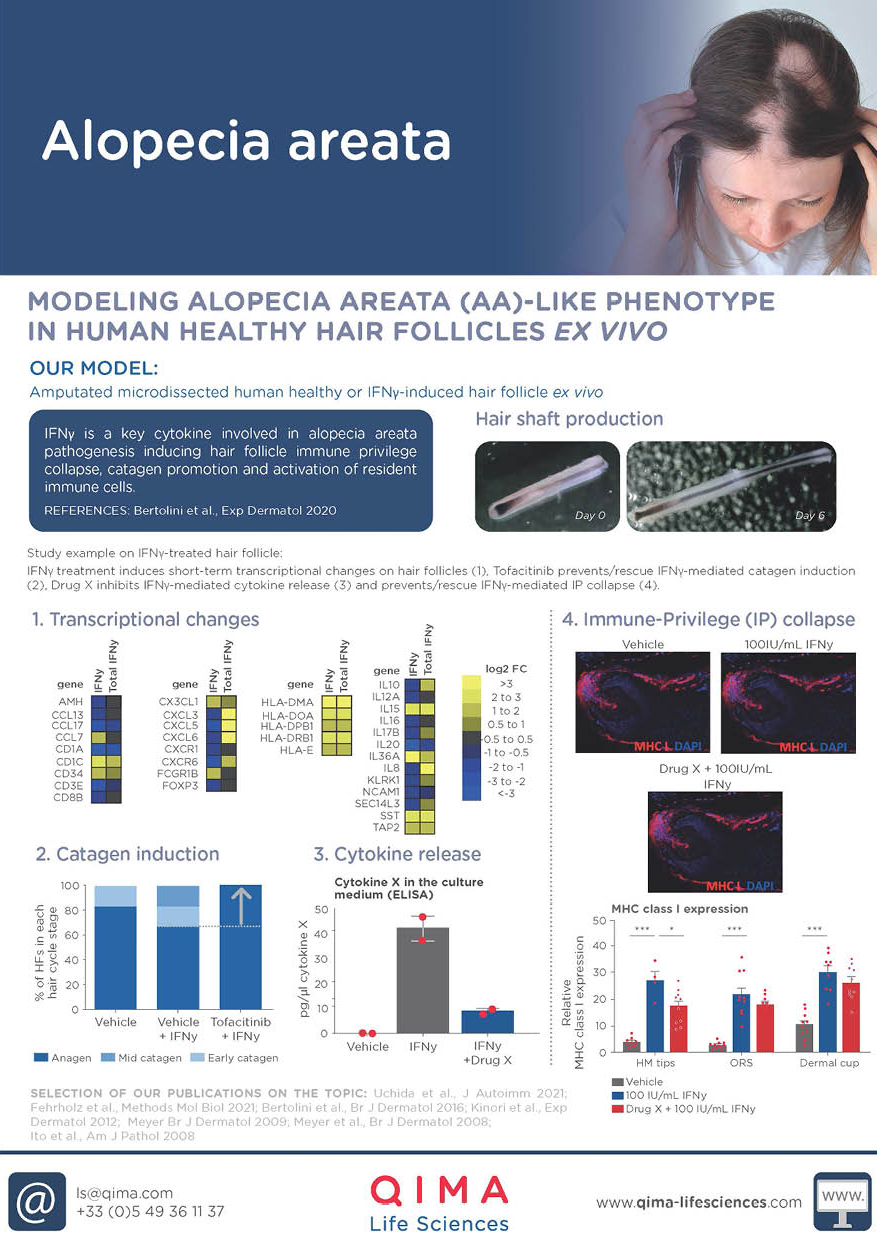


Scarring alopecias are a group of chronic inflammatory disorders in which the hair follicle (HF) is the primary target of inflammation, leading to irreversible follicular destruction, fibrosis and permanent hair loss. They are broadly classified as lymphocytic (e.g. lichen planopilaris, frontal fibrosing alopecia, discoid lupus erythematosus), neutrophilic (e.g. folliculitis decalvans) or mixed.
Current management aims to control inflammation and halt disease progression. Depending on subtype and severity, it may include topical, intralesional or systemic corticosteroids, antimalarials, tetracycline antibiotics, other immunosuppressants and, in some subtypes, 5-alpha reductase inhibitors. Most of these options are used off-label and are supported by limited high-quality evidence. Responses are variable, and treatment limits disease activity rather than restoring lost follicles.
Because the destruction of follicular stem cells in the bulge region is thought to underlie the irreversibility of scarring alopecias, understanding bulge biology, including the loss of immune privilege and the mechanisms of fibrosis, is central to identifying targets that could prevent permanent follicle loss. Together with disease heterogeneity and the lack of validated endpoints, this makes scarring alopecias a persistent challenge for drug development.
At QIMA Life Sciences, we support our clients’ drug discovery and development programmes with advanced solutions to investigate these mechanisms and evaluate novel therapeutic approaches at preclinical and clinical stages.
Interested in learning how we can support your drug discovery and development?
Learn more below.
Related Publications
SELECTED PUBLICATIONS
Epithelial-to-Mesenchymal Stem Cell Transition in a Human Organ: Lessons from Lichen Planopilaris
>> Check the full list HERE.
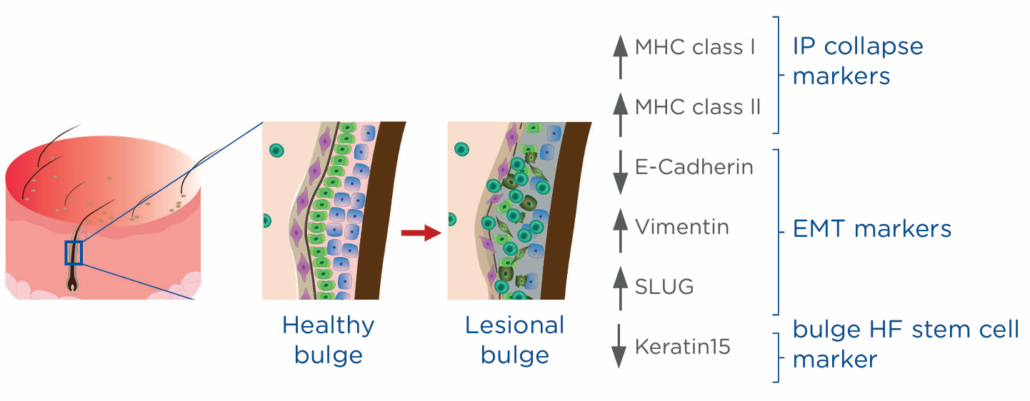
Scarring alopecia: bulge IP collapse, EMT and HF stem cell loss.
What we help you achieve
- Generate mechanism-focused preclinical evidence to support lead selection and early proof-of-concept, using multi-marker readouts (MHC class I/II, K15+ stem cells, CD8+ T cells, E-cadherin, vimentin, SLUG) in healthy follicles challenged with a cytokine cocktail or PBMC co-culture, and in lesional LPP and FFA scalp skin or follicles.
- Test candidates in both prevention and rescue settings, with systemic, topical, or intradermal application, to see whether a compound blocks or reverses an established lesional phenotype.
- Benchmark candidates against reference compounds within a controlled ex vivo assay framework.
- Reduce reliance on animal studies by filtering and prioritizing compounds in human scalp skin, hair follicles, and donor-derived cells before any further development.
Ex vivo models mimicking scarring alopecia-like phenotypes
Our method:
- Organ culture of microdissected full-length healthy human hair follicles or healthy human scalp skin to which a cytokine cocktail is added to induce immune privilege collapse and/or epithelial-to-mesenchymal transition.
- Co-culture of microdissected full-length healthy human hair follicles with human PBMCs (isolated from frozen or fresh blood human blood).
Immune Privilege (IP) collapse
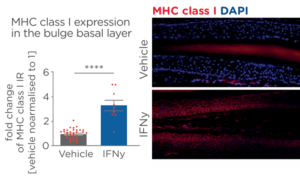
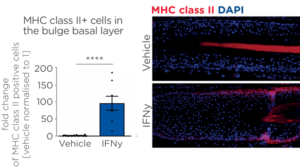
Study example on IFNγ: IFNγ treatment induces IP collapse in the hair follicle bulge ex vivo.
Our analytical offer includes (but is not limited to):
- Cytokine arrays
- Cell-cycle analysis
- ELISA immuno-histochemistry
- Multi-omics analyses
- Immunoflourescence (immune cells & stem cells, EMT, immune privilege apoptosis, proliferation markers)
- qRT-PCR and more!
Lesional Ex Vivo Models
Our method:
- Comparison of human scalp skin (or hair follicles) organ culture ex vivo from healthy donors vs. lesional frontal fribotis alopecia (FFA) or lichen planopilares (LPP) patients.
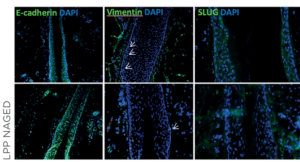
Epithelial-to-mesenchymal transition (EMT)
Study example on PPAR-γ: PPAR-γ stimulation by N-Acetyl-GED reverses the established epithelial-to-mesenchymal transition in the bulge of lesional LPP HFs ex vivo
At QIMA Life Sciences, we are committed to staying at the forefront of dermatology research by developing innovative approaches.
We offer smart solutions for studying psoriasis using validated models at both preclinical and clinical stages, making us the perfect partner for your research.
Interested in Learning More?
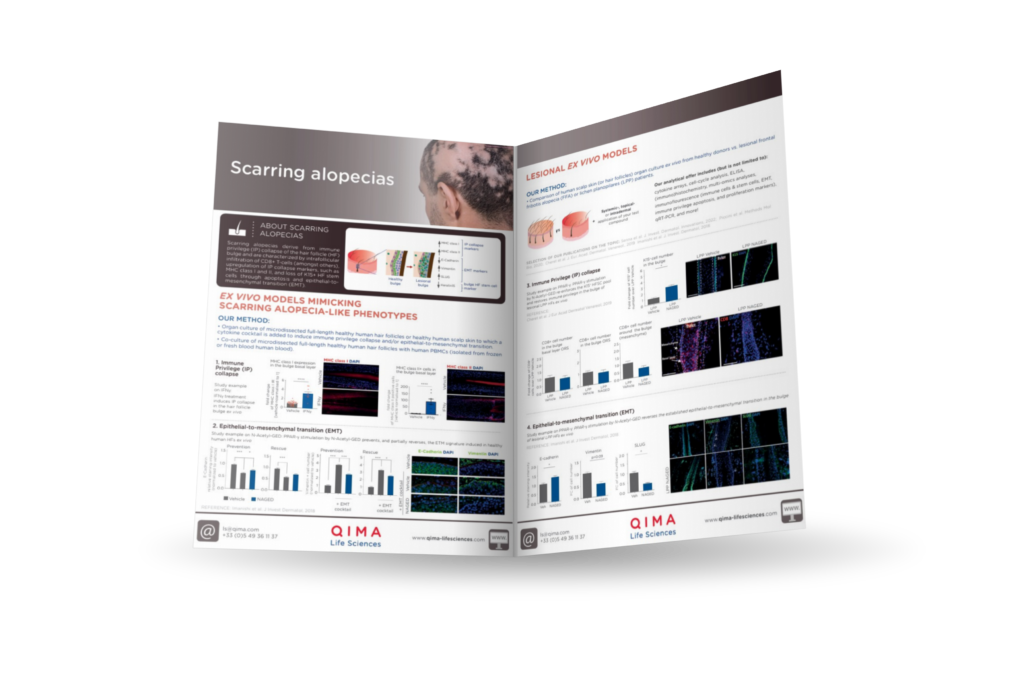
Explore Our Models & Assays in Our Flyer
SCARRING ALOPECIAS
Explore Other Related Topics
HAIR BIOLOGY – MODELS FOR RESEARCH & TESTING
HAIR FOLLICLE DISORDERS

ALOPECIA AREATA