Bioactivity testing
Whole blood bioassays enable rapid, multi-donor efficacy testing.
These assays are well suited to anticipating serum interferences, storage, freeze-thaw, and batch effects.



Immune-Inflammation
We collaborate closely with our clients
to build a healthier future.
QIMA Life Sciences provides ex vivo whole blood bioassays to assess immune activation, modulation, and safety in a physiologically intact, low-manipulation system. By preserving native immune cell populations, cell-cell interactions, and autologous soluble factors, whole blood models enable quick, robust evaluation of immune responses within an integrated testing strategy. Our assay formats, stimulation conditions, and donor selection are configured in collaboration with client science teams and are adaptable to meet developing programme needs.
These platforms support comprehensive assessment of inflammatory signalling, compound bioactivity, and immune safety across a broad range of therapeutic modalities, and form a core part of QIMA’s integrated immunology and inflammation services.
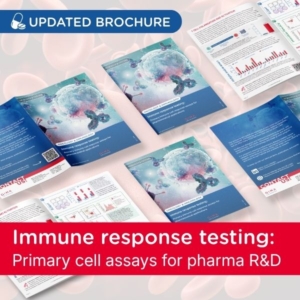
We use immortalised and differentiated immune cell models as reproducible systems for defined immunology research questions. These models are particularly valuable where controlled experimental inputs, pathway‑level resolution, or comparative screening are required. They are well suited to ranking compounds, evaluating dose–response relationships, and interrogating specific immune signalling pathways.
We work with primary immune cells from fresh or cryopreserved biological materials to generate immune data with strong physiological relevance. Cells are isolated using validated methods and strict quality criteria, and stimulation and treatment strategies are tailored to the immune biology and disease under investigation.
Primary immune cell systems are best applied when programmes require targeted immune pathway analysis while capturing donor heterogeneity to support translational decision‑making.
In addition to circulating human immune cells, we support primary rodent cell models to enable pre‑clinical translation and species‑matched mechanistic studies. Our suite of inflammatory disease‑specific and advanced ex vivo tissue‑resident immune models also enhances resident cell research in organ‑ and disease‑relevant contexts. Together, these platforms allow immune questions to be addressed across discovery, pre‑clinical, and translational research workflows.


QIMA Life Sciences supports in vivo inflammation and immune disease studies to enable translational validation of immune mechanisms identified in our cellular and ex vivo systems. Rodent models are selected based on disease biology and immune pathway relevance and are delivered by Axis Bio, a QIMA Life Sciences Company. These inflammatory disease studies can be conducted in fully immunocompetent mouse strains, or PBMC-humanised mice in select contexts, to model human specific T-cell responses. For immuno‑oncology research, our dedicated in vivo service suite is detailed here.
Generalised inflammation models are used to assess systemic or localised immune activation, immune modulation, and PK/PD relationships under controlled conditions. Integrated pharmacology can enrich outputs, and we offer expert guidance in balancing disease severity, treatment toxicology, and efficacy.
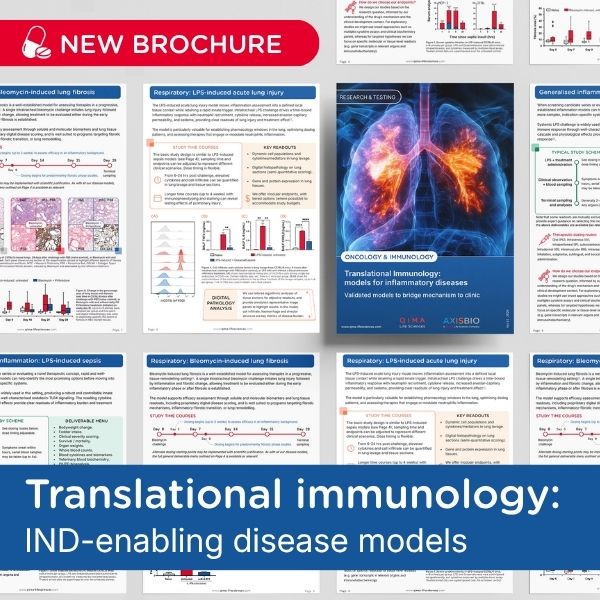
Systemic inflammation:
LPS‑induced models to evaluate broad immune activation, organ effects, and cytokine responses.
Air pouch inflammation:
Localised inflammation models to study immune cell recruitment and mediator release. Adjustable stimuli can mimic different disease contexts.
Common readouts:
Clinical observations, veterinary blood biochemistry, immune cell infiltration, multiplexed cytokine profiling, and biomarker analysis.
Specific in vivo models are applied to investigate mechanisms in the context of defined inflammatory and immune‑mediated diseases, enabling evaluation of therapeutic hypotheses in whole‑system biological settings. Many of these models can be designed to assess acute inflammation, or to mimic chronic disease and post-acute infection states.
Dedicated service pages highlight therapeutic areas with well-established in vitro, ex vivo, and in vivo disease pipelines (e.g. atopic dermatitis, cancer, and many more), while additional indications are supported through disease‑ and treatment‑appropriate preclinical study design in consultation with our scientific teams.
Highly controlled clinical scoring and welfare observations, multiplexed cytokine and biomarker readouts, validated flow cytometry panels, and digital pathology approaches are routinely used through in vivo inflammatory disease models, to provide objective, accurate multifaceted data outputs. These packages provide critical data to enable IND application and progress candidates to the clinic.
A dedicated dermatology‑focused in vivo inflammation package is also under development to complement our expertise in this field. Contact our team to find out more.
Our expert teams design immunology studies by aligning research objectives with the most appropriate models and validated analytics. Predefined assay panels are available for rapid screening, and we routinely add value by building bespoke studies around the needs of our clients to ensure timely, interpretable, and relevant data.
Selection of the correct endpoints and means of quantification is central to success, and our immunology toolbox covers a range of carefully selected and thoroughly validated platforms applied across immune models. This can be applied to answer questions such as:
How does a compound modulate a specific immune pathway?
Use surrogate immune cell lines and blood‑derived immunocyte screens for throughput. Stimulate defined immune pathways and quantify focused cytokine outputs (e.g. IFN‑γ) by RT‑qPCR and HTRF, retaining supernatants for optional downstream or retrospective analyses.
Is there a risk of excessive immune activation or cytokine storm?
Start with ex vivo human whole blood to preserve physiology. Expose donor‑matched samples under standardized stimulation and measure cytokine release kinetics (e.g. TNF‑α, IL‑6), supported by monocyte activation markers to contextualise immune risk.
Does the molecule trigger unwanted adaptive immune responses?
Use primary T‑ and B‑cell systems or bulk PBMCs with antigen‑specific stimuli to evaluate immunogenicity potential. Assess T‑cell activation and recall responses using flow cytometry with intracellular cytokine staining, complemented by immunoglobulin release profiling.
How does immune modulation translate in a disease‑specific context?
Select immune models aligned to disease biology, such as tissue‑resident immune systems, ex vivo culture models, or immune tumour co‑cultures. Measure context‑specific responses such as target cell apoptosis in tumour co‑cultures, or cell infiltration in inflammatory disease models, using targeted molecular and spatial immune profiling.
Our analytical platforms are selectively applied across experimental strategies to ensure data continuity and clarity, from our in vitro screens to ex vivo samples, advanced culture models, and in vivo systems.

Core platforms include:
Additional specialised platforms (application‑specific):
Analytical platforms are selected based on the biological system, and research objective. Contact our team for detailed assay descriptions and use cases, validation status, and panel availabilities.
The transition between preclinical and clinical phases is a difficult one, and data continuity can be a major success factor. For assets entering clinical development, QIMA Life Sciences Brazil fully supports clinical trials, alongside integrated analytical chemistry, formulation development, and regulatory support.
QIMA Life Sciences also acts as a provider of European dermatology clinical trials, and can supplement any trial with cutting edge clinical imaging, and non-invasive clinical sampling and bioanalysis support services. Our teams regularly continue to support clients during clinical phases across multiple indications by performing ex vivo analyses of clinical samples. Through these services, we endeavour to maintain continuity of immune profiling, biomarker assessment, and data integration across treatment development.

Phase I-IV clinical trial capabilities and regulatory consulting

Analytical chemistry & bioanalytical capabilities

Advanced clinical imaging for tracking visible inflammation

Clinical sampling and bioanalysis support

Specialist solutions for veterinary immunology
How do you determine the right immune model for a programme?
Our scientists directly collaborate and engage with the programme. Model selection is guided by the biological question, the exact needs of the programme, and the intended use of the data. Early-stage programs with a clear mechanistic hypothesis often start in targeted cell line systems or primary cell assays for throughput and control. As hypotheses evolve, more physiologically relevant systems – whole blood, ex vivo tissue models, or in vivo studies – are introduced to validate findings in context and produce the data that’s needed for regulatory submissions and go/no-go milestones.
How do you choose between readouts and the platforms to measure them?
The choice depends on many factors. For example, when deciding what cytokines to analyse in an assay and whether to use single or multiplex readouts, we factor the pathway and mechanism under investigation, total number of analytes required, the sample volume, and the resolution needed at the stage of the pipeline.
Multiplex cytokine analysis is efficient when broad immune signatures are needed from a single sample, or research is highly exploratory. Single-plex ELISA or HTRF is often suggested when a specific analyte needs to be quantified with high sensitivity, when cross-reactivity between assays is a concern, or to hone the focus and statistical power of an assay. The exact selection of model, stimulus, and readout is often under-estimated in immunology programmes and this is something our teams recognise and provide expert guidance on.
What is an ex vivo whole blood bioassay, and when is it preferable to isolated cell models?
An ex vivo whole blood bioassay exposes freshly collected blood to a test compound or stimulus while preserving native immune cell populations, cell–cell interactions, plasma proteins, and autologous soluble factors. This contrasts with assays using isolated PBMCs or individual immune cell types, where the physiological environment is disrupted. Whole blood is generally preferred when the research question involves systemic immune activation, when plasma-dependent immune mechanisms are relevant, or when early immune safety profiling requires a system close to human physiology.
For programmes where cost, speed, throughput, reproducibility, and low manipulation are priorities – particularly biologics and immune safety assessments – whole blood is a powerful starting point. Isolated cell models can offer greater experimental control and are well suited to mechanistic dissection of specific immune pathways, but we routinely use both as complementary platforms to progress a candidate.
Can whole blood be sourced from non-human species for cross-species studies?
Yes. Whole blood bioassays can be performed using blood from multiple species, including rodents and canines, supporting cross-species reactivity, veterinary research, and comparative pharmacology studies. Species-matched whole blood formats are used where understanding the immune response in the intended preclinical model is relevant to study design — for example, when confirming that a compound active in human whole blood produces a comparable response in the species to be used for in vivo studies.
Of course, species specific blood samples are also used to test the safety and efficacy of veterinary therapeutics.
Can primary immune cell studies be integrated with ex vivo tissue models and in vivo studies in a single programme?
Yes. Multi-component programmes that span primary cell assays, ex vivo tissue models, and in vivo inflammation studies are a core part of how QIMA Life Sciences collaborates with clients. Circulating immune cell data from PBMC or whole blood studies can be compared to responses in tissue-resident immune populations – for example.
This integration is not automatic: study designs need to be planned with cross-system comparability in mind. Our scientific team can design for data continuity across model systems, which is why early-stage feasibility discussions are valuable – they shape how data will connect across the programme, and also help introduce our ethos of scientific collaboration, adaptation and continuity.
I don’t see the disease or immune pathway I’m interested in listed on this page. Can you still support my research?
The diseases and immune pathways presented on this page are illustrative examples, rather than a complete list of the immunology and inflammation research supported by QIMA Life Sciences.
Our immunology teams regularly work with Pharma and Biotech partners on additional or emerging disease areas and immune mechanisms not explicitly shown here. Support is determined based on factors such as biological relevance, model suitability, translational feasibility, and development stage. Where appropriate, we can select, adapt, or design in vitro, ex vivo, and in vivo immunology studies tailored to the specific research objective.
If your disease area, target, or immune pathway is not listed, we encourage you to contact our immunology team to discuss your program. Following review, we can confirm how your research can be supported within our immuno‑inflammation platform, and advise on experimental approaches.
Immune and inflammatory pathways sit at the core of many therapeutic areas, from allergy to chronic diseases to immuno‑oncology. QIMA Life Sciences provides a connected portfolio of advanced in vitro immunology models, disease‑specific in vivo systems, and validated analytical platforms to help translate immune biology into actionable decisions.
Our integrated approach supports immune profiling, mechanism‑of‑action studies, safety assessment, and translational validation across discovery, preclinical, and clinical phases. Whether you are at the hypothesis stage or deep into a preclinical programme, our experts will work with you to identify the right models, design the right study, and interpret what the data means for your next decision.